AI Marketing Campaigns for Auto Shops
Why Campaigns Weren't Being Used
Feature usage among add-on subscribers
Online booking
80%
Campaigns
40%
Shops bought the add-on to win new customers, not to bring them back.
Business goal: Reduce churn and move Tekmetric closer to an all-in-one shop management platform.
Success metrics: Campaign creation first, then appointments booked from campaigns, then repeat customers over time.
Metric
Baseline
Target
Campaign usage
40% within 6 months
60%
Churn risk
20%
Reduce 5%
NPS
40
45
Monthly appts booked
120 per shop
180+
Time to first campaign
30 mins per campaign
5 mins
"I know I should send something, I just don't know what."
Insight 01
Most shop owners don't have marketing experience
Insight 02
Values a tool to guide them on best practices
User persona
Rob M.
Owner-operator, independent auto repair shop
“Marketing matters. But between my techs, my customers and the cars, it’s never today’s priority.”
Goals
Bring customers back for their next service
Grow without a marketing budget or agency
Stay in control of anything sent under his shop’s name
Pain points
A blank template leaves him with nothing to say
Stretched thin across staff, customers and repairs
On a busy day, marketing is the first thing dropped
Needs
Campaigns written for him, in his shop’s voice
The right customers at the right send time
Final say and a record of every change
Why he’s the fit
He already pays for marketing and trusts Tekmetric to make the call. He doesn’t want to learn marketing. He wants it done for him, with him in charge.
Prewritten Templates
AI was on the radar, but I started with the simplest answer to the insight: give shops something to send. I tested 10 prewritten emails and text templates with a beta group of 10 shops over 2 weeks. Usage rose about 20%. That told me two things. Shops trust us to make the right marketing call, a value we had to protect. And templates alone weren't enough.
Templates test
40%
48%
Campaign usage, +20%. Better, but not the shift we needed.
The Pivot
On a busy day, marketing drops off the list entirely. The goal wasn't to make shops better marketers, it was to do the marketing for them under their supervision. That insight also gave a clear, validated reason to use AI.
Problem reframe
The goal wasn't to make shops better marketers, it was to do the marketing for them under their supervision.
3 Directions of AI Campaign Building
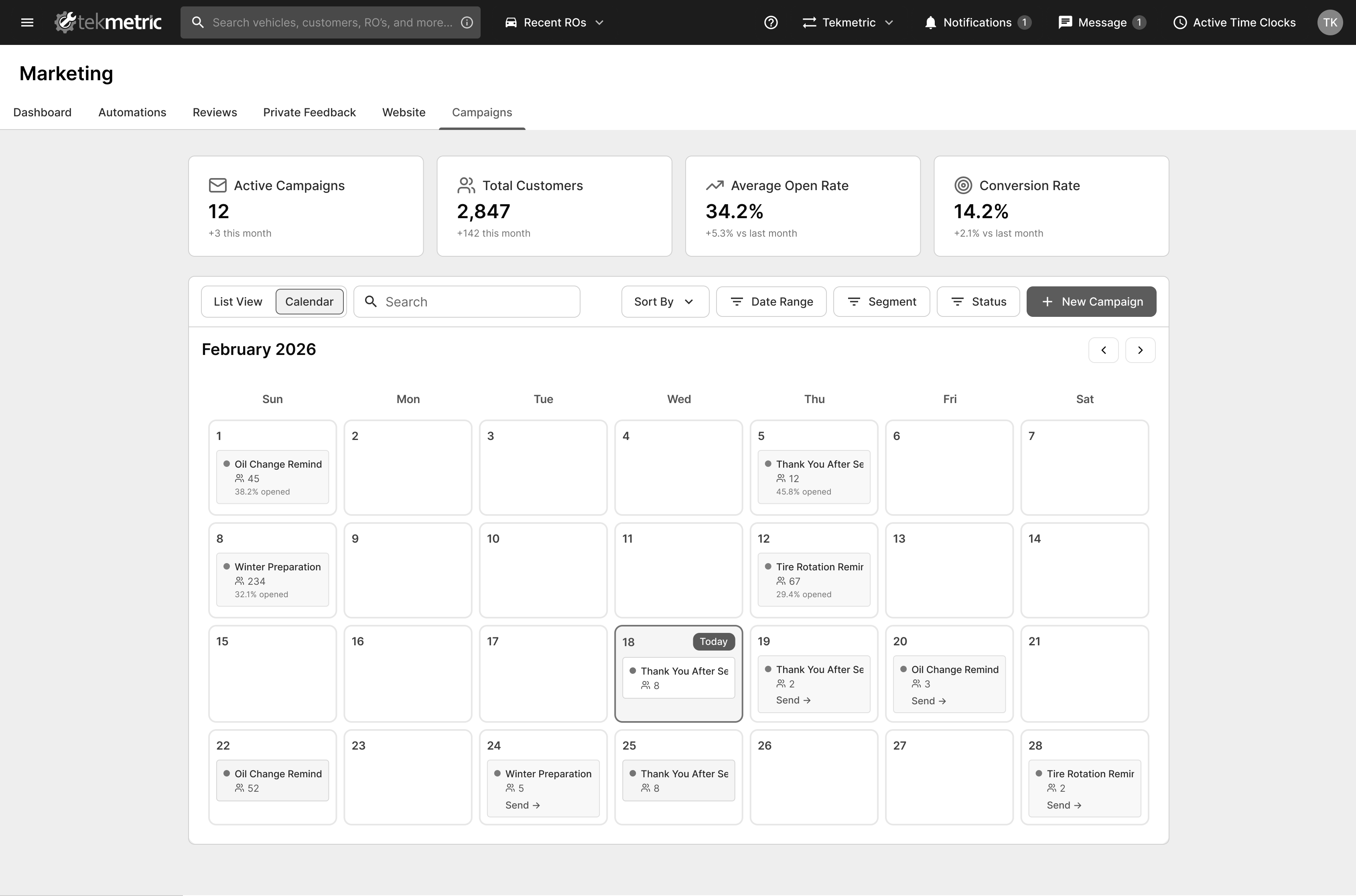
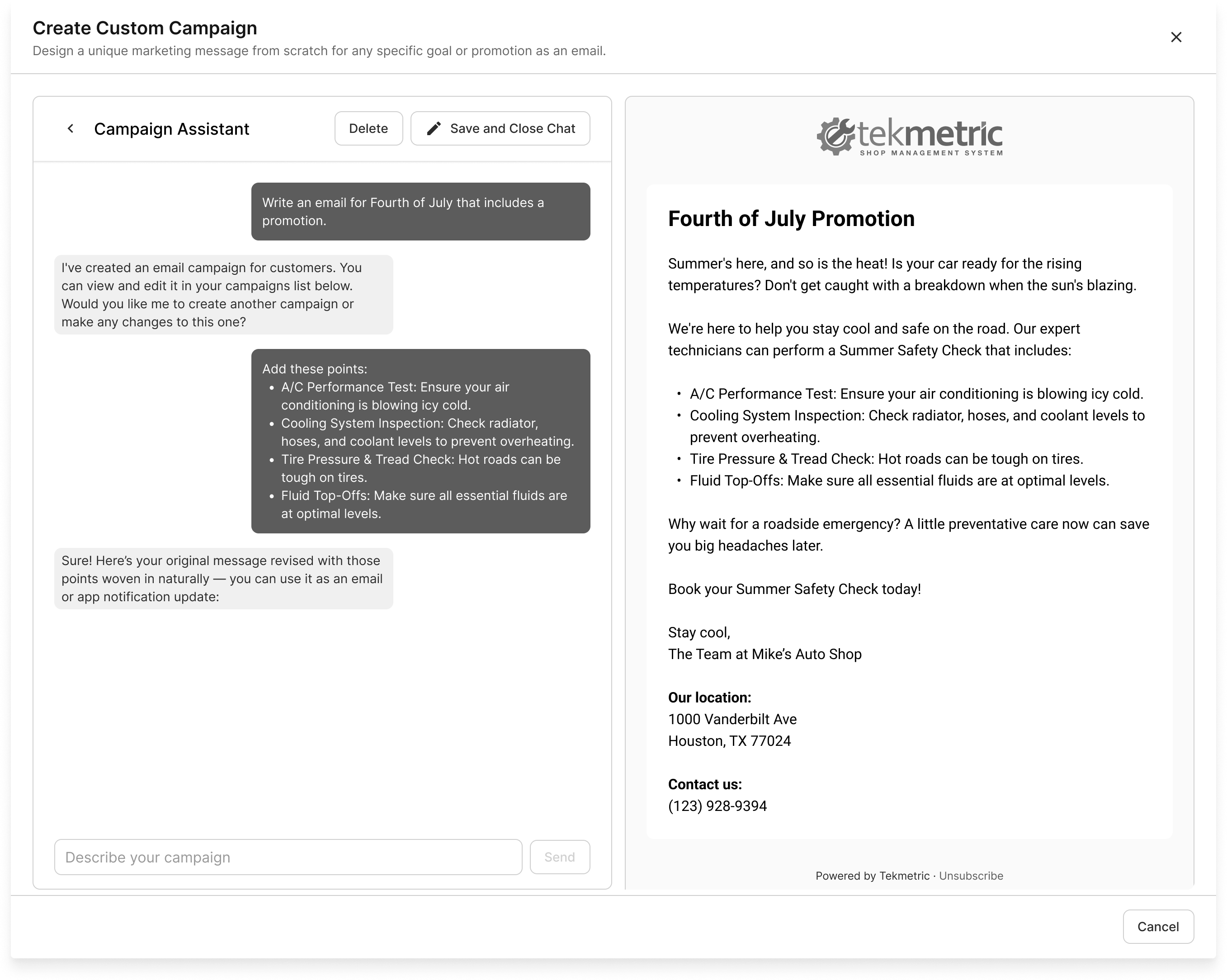
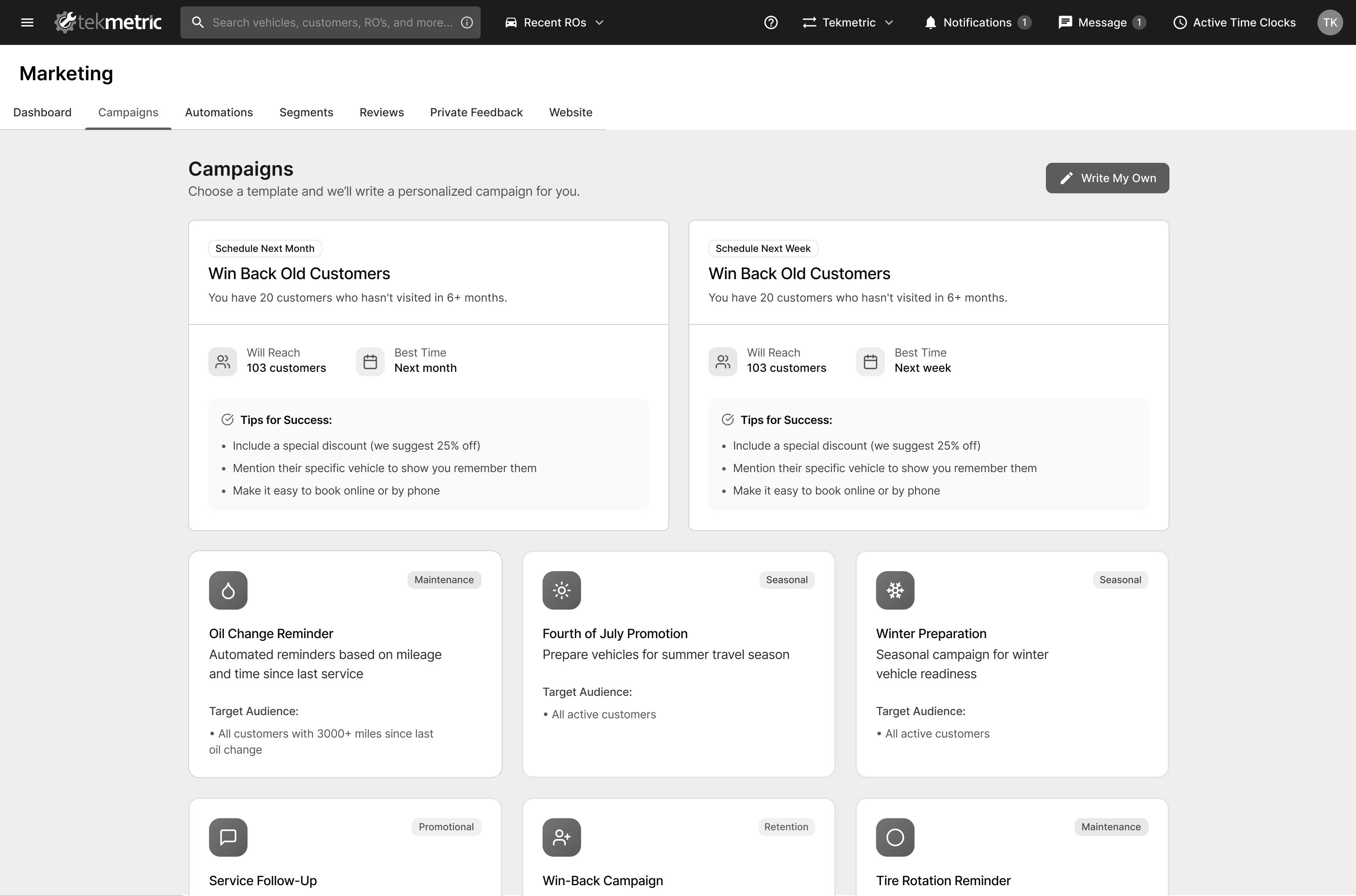
AI Campaign Builder
The AI campaign builder learns the shop's tone from previously sent messages, suggests campaigns for the right customer segment, and schedules them for the best send time. The owner stays in charge: every campaign is a draft until they review and approve it. To keep it familiar, I built on the existing campaign editor rather than introducing a new surface.
How a campaign gets made
01 · Data layer
Everything the shop already knows
Customer DB
Service history
Weather API
Calendar
↓
02 · Business rules
Deterministic rules spot opportunities in the data
Overdue oil
Winter tires due
Lapsed customers
High-value VIP
↓
15–20 opportunities
03 · Opportunity selection
LLM
Picks the 4–5 best opportunities for this week
Input Shop context, weather, recent campaigns, all opportunities
↓
4–5 selected
04 · Campaign generation
LLM
Writes full campaigns for the selected opportunities
Output Subject lines, email and SMS copy, CTAs, timing
Voice Trusted local mechanic, no marketing jargon
↓
05 · Shop owner
Human in the loop
Review and send
Edit if needed, approve, schedule the send.
Why two LLM stages?
Lower cost: the model only writes the 4–5 campaigns that matter
Business rules stay deterministic, outside the model
No wasted generation on campaigns that never send
Tradeoffs
Decision
What We Traded
Why
Default segments instead of AI-generated ones
Smarter targeting at launch
Cut build time and model cost; AI segments became a later phase
About 3 AI campaigns a week, not daily
More volume of campaigns
Matches marketing norms and keeps generation costs sustainable
Data trail before the impact dashboard
Showing AI's impact at launch
Owners adopt what they can audit; trust had to come first
Impact
Against the goals we set upfront:
60% of AI drafts were approved without edits. The feature also set the principles for later AI work, including custom segments. The real win wasn't speed. Independent shops with no marketing budget now get quality campaigns at a fraction of what an agency ~$1,250 – $2,250/month would cost.
Metric
Target
Result
Campaign usage
40% to 60% in 6 months
80%
Monthly campaigns sent
12
16
Churn risk
Reduce 10%
20 > 18%
NPS
45
45
Appointments booked
180 appts per avg shop
200 appts
Time to first campaign
5 mins
30 mins to 5 mins
Learnings
What I'd do differently: Test the AI concept earlier, or involve shops in setting voice from day one.
Next steps: AI-generated segments, the impact dashboard, send times tuned to each shop's own engagement data.